Fats on the Plate: What Research Shows
Published: February 2026
Understanding Fats in Nutrition
Dietary fats represent the smallest section in most plate models used for nutrition education. This small visual allocation often causes confusion – does small size mean fats are unimportant? The answer is no. Small plate allocation reflects fats' caloric density (9 calories per gram, compared to 4 for protein and carbohydrates) rather than their nutritional insignificance.
Fats serve critical functions including:
- Absorption of fat-soluble vitamins (A, D, E, K)
- Component of cell membranes
- Insulation and organ protection
- Signaling molecules in various bodily processes
- Flavor and satiety in foods
Types of Dietary Fats
Unsaturated fats:
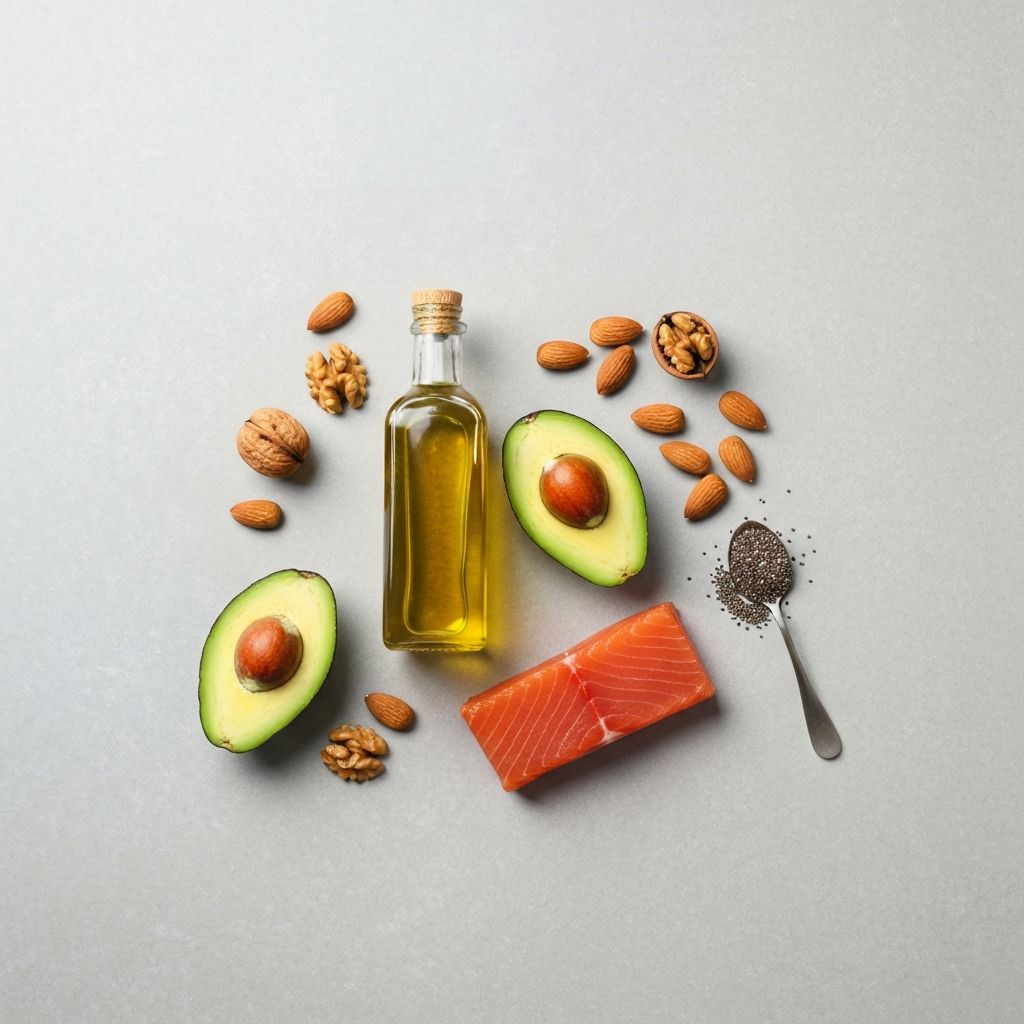
Often described as "healthier" fats, unsaturated fats are primarily liquid at room temperature and come predominantly from plant sources and fatty fish.
- Monounsaturated fats: Found in olive oil, avocados, almonds, peanuts
- Polyunsaturated fats: Found in vegetable oils, nuts, seeds, fatty fish
Saturated fats:
Primarily solid at room temperature, saturated fats come from both animal and plant sources.
- Animal sources: dairy fats, fatty meats, poultry skin
- Plant sources: coconut oil, palm oil
Trans fats:
- Mostly artificially created through partial hydrogenation of oils
- Found in some processed foods and baked goods
- Also occur naturally in small amounts in some animal products
What Research Shows
Nutritional research on fats has evolved significantly over time. Current evidence suggests:
On unsaturated fats:
- Regular consumption of foods containing unsaturated fats is associated with cardiovascular health benefits in many studies
- Olive oil and fish rich in omega-3 fats appear in many dietary patterns associated with health
- Plant-based unsaturated fat sources also provide fiber and other beneficial compounds
On saturated fats:
- Current research suggests the relationship is complex and depends on context
- Some saturated fats (like those in dairy) may have different effects than others
- Moderate amounts appear in most varied diets without requiring elimination
On trans fats:
- Consistent research shows trans fats have negative health associations
- Most health organizations recommend minimizing intake
- Many countries have restricted their use in food production
Fats and Flavor
An important practical consideration is that fats contribute significantly to flavor, texture, and satiety of foods. This is why small amounts of fat can make foods more enjoyable and satisfying – not as an indulgence but as a practical nutritional principle.
The plate model's small allocation of fats reflects the idea that a little fat can go a long way in terms of both flavor and nutritional function. Drizzling olive oil on a salad or adding nuts to a meal provides fat content with high flavor impact and nutritional benefit.
Fats in Different Foods
It's important to note that fats don't exist in isolation. When people consume fat sources, they also consume other components of those foods:
- Olive oil: Provides polyphenols and antioxidants along with unsaturated fats
- Nuts and seeds: Provide fiber, protein, and micronutrients along with fats
- Fatty fish: Provides omega-3 fats, protein, and various micronutrients
- Avocados: Provide unsaturated fats, fiber, and potassium
- Dairy fats: Come packaged with protein and calcium in dairy products
Practical Fat Intake
Research suggests that moderate fat intake – coming primarily from unsaturated sources with limited trans fats – appears in most dietary patterns associated with good health outcomes. The exact amount varies based on individual factors, overall diet composition, and activity level.
The key practical principle from plate models is moderation and focus on diverse fat sources rather than elimination or unlimited consumption.
Important Context
Information note: This article provides educational information about dietary fats based on current research. Individual fat intake recommendations vary based on health status, activity level, and other factors. This is general information, not personalized guidance.